How Billy Madison Could Have Won the Academic Decathalon

If I could slip back to 1995, I’d tell Little Daniel two things. One: buy NFLX and never look back. Two: quoting Billy Madison does not, in fact, constitute a personality. I cannot overstate the death grip this movie had on me. It was peak comedy, the funniest, most endlessly quotable thing my teenage brain had ever encountered. Adam Sandler could do no wrong, and I made sure everyone in my life knew it by regurgitating his lines over and over, context be damned.
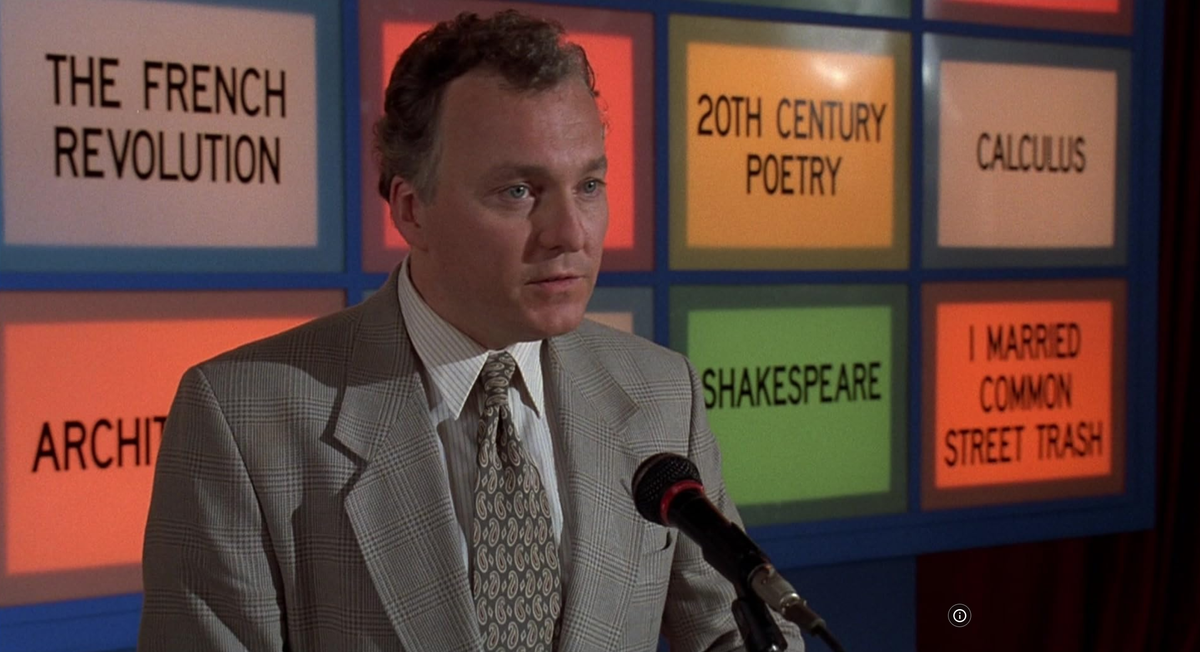
I threw Billy Madison on the other day as background noise, and as the familiar lines started rolling in, I felt a deep, existential shame settle over me. Still, I pressed on, all the way to the Academic Decathlon, where Billy absolutely detonates his final question in spectacular fashion. And sitting here in 2025, nearly thirty years after this cinematic masterpiece hit theaters, I had a thought: we live in an age where I can know anything instantly. So what could Billy have said to actually win that point? And if I were standing at that podium, what would I have said? I could probably name-drop Thorstein Veblen’s Theory of the Leisure Class from 10th grade AP History... but not much beyond that.
So let’s do a little research. Let’s revisit the questions. And let’s find out how Billy Madison could have crossed the finish line without invoking a puppy who lost his way.

Question: The Industrial Revolution changed the face of the modern novel forever. Discuss, citing specific examples.
Billy’s answer to this question is presented with such earnest cinematic flourish that, for a fleeting moment, you almost believe he’s about to nail it. The music swells. The camera zooms in. The audience looks on with a kind of misplaced optimism. It’s framed like triumph is imminent... like Billy has ascended through grades one through twelve to deliver a shockingly lucid dissection of the Industrial Revolution’s impact on the modern novel. And then… he opens his mouth. What follows is a rambling fable about a lost puppy that manages to ignore every single word of the prompt.
The music dies. Reality reasserts itself. The host delivers a teardown so visceral and devastating that its words still echo to this day.
So, in the spirit of imagining a world where Billy actually earned that point, here’s what he might have said instead.
What a Reasonable, Decathlon-Ready Answer Looks Like:
"The Industrial Revolution didn’t just change how people worked; it reshaped how writers understood the world. Rapid urbanization, widening class divides, and the rise of mechanized labor gave novelists new subjects and new anxieties to work with.
Charles Dickens used "Hard Times" to critique industrial education, the dehumanizing effects of factory life, and a society that treated workers as interchangeable parts. Elizabeth Gaskell’s "North and South" tackled labor conflict, shifting gender expectations, and the tensions between rural tradition and industrial ambition. Even the structure of the modern novel shifted as serialized publishing (made possible by new printing technology) encouraged tighter pacing and episodic storytelling.
In short, the Industrial Revolution rewired the literary imagination and pushed writers toward themes of class struggle, moral responsibility, and the human cost of unchecked industry."
After Billy sits down, he looks over at the principal, who maybe says:
"An impressive effort. You stayed on topic, demonstrated a clear understanding of the Industrial Revolution, and even cited multiple literary works without once mentioning a puppy. Your argument was coherent and well-organized, and at no point did I feel the need to question your mental state. In fact, this is exactly the sort of answer I hoped to hear today.
You’ve earned all available points on this question… and my sincere gratitude for not wasting anyone’s time."
The only real downside to Billy actually answering correctly is that poor Steve Buscemi would be left standing in the hallway, clutching his rifle and wondering why the hell he's even in the movie. But with a proper response, Billy would’ve been ahead by one point already, and this answer would put him ahead by two. Eric couldn’t recover. Game over. Company won. Cue the cutaway to Billy marrying Veronica Vaughn, who is... all together now... sooooo hot. Damn it. I’m quoting the movie again.
Speaking of Eric, though, let’s imagine a world where Billy doesn’t completely combust onstage. Maybe he fumbles the question in a less dramatic way. What could Eric possibly have said to even the score? That brings us to his question, one that, in the movie, he answers with a firearm he was evidently carrying the entire time for some reason. Let’s take a look at what a sane, gun-free answer might have looked like.

Question: The American business environment has fundamentally changed following the insider trading and savings and loan scandals. Explain business ethics, and how they are applied today.
Eric’s moment arrives with all the sweaty, jittery gravitas Bradley Whitford can summon. He squirms in his suit, eyes darting, jaw tightening, the picture of a man who attended Harvard (Second team, all-American, Harvard track) yet somehow still radiates the energy of someone failing a book report in fifth grade. The camera closes in. The room quiets. This is it, his clean shot at tying the score after Billy’s spectacular fumble. And then, in a turn no business ethics professor has ever encouraged, he draws on the Sandman.
What exactly was Eric’s plan here? How did he imagine this playing out? Billy had just face-planted his answer; Eric didn’t need to do anything except speak in complete sentences. But instead of focusing on insider trading or fiduciary responsibility, the man simply… broke.
Let’s talk about what Eric should have said.
A Normal Human Answer:
"Business ethics refers to the standards of conduct that guide corporate behavior, especially in environments where money and power can distort judgment. After the insider-trading and savings-and-loan scandals of the 1980s, public trust in American business eroded, pushing companies to adopt clearer codes of conduct and greater transparency.
Regulations such as the Insider Trading and Securities Fraud Enforcement Act strengthened penalties and reinforced the idea that ethical behavior isn’t optional. Today, responsible firms emphasize accurate financial reporting, avoiding conflicts of interest, protecting whistleblowers, and treating customers, shareholders, and employees with integrity.
Modern organizations rely on compliance training, internal auditing, and ethical leadership to prevent abuses and rebuild trust. In short, business ethics is the framework that keeps companies accountable and the marketplace functioning."
To which the principal might have said:
"A clear, focused response. You addressed the scandals referenced in the question, articulated the purpose of business ethics, and explained how modern organizations apply them. Your answer was coherent, relevant, and free of threats to anyone’s personal safety.
You’ve earned full points on this question. Thank you for demonstrating that it is, in fact, possible to discuss business ethics without resorting to armed confrontation."
Had Eric delivered this answer instead of reaching for the nearest concealed weapon, the two of them would have been neck and neck: Billy weighed down by his puppy parable, Eric buoyed by a surprisingly lucid discussion of fiduciary responsibility. From there, the rest of the board would have been Eric’s to lose. All he had to do was keep it together, let Billy shoot himself in the foot (figuratively), and avoid getting shot in the butt himself (literally) by Steve Buscemi.
But this is Billy Madison, where nobody keeps it together and firearms apparently come standard with number two pencils.
Could Billy Have Won?
If we’re doing the happily ever after ending, probably! All he needed was a halfway coherent answer about Victorian literature instead of a metaphorical puppy, and his margin over Eric would’ve been more than enough to coast to victory. The Academic Decathlon wasn’t designed to be impossible; it was designed to filter out people who answer essay questions with children’s stories and those who respond to pressure with gunfire. A low bar, even in 1995.
But hey, now you know the answers. You know how the Industrial Revolution shaped the modern novel. You know how business ethics evolved after the scandals of the 1980s. You can even name-drop Thorstein Veblen to derail a dinner party. Should you ever find yourself battling your father’s scheming second-in-command for control of a hotel empire, you’ll be ready. No puppies, no panic, no firearms. Just solid responses and the quiet confidence that comes from having out-researched a fictional academic decathlon from three decades ago.
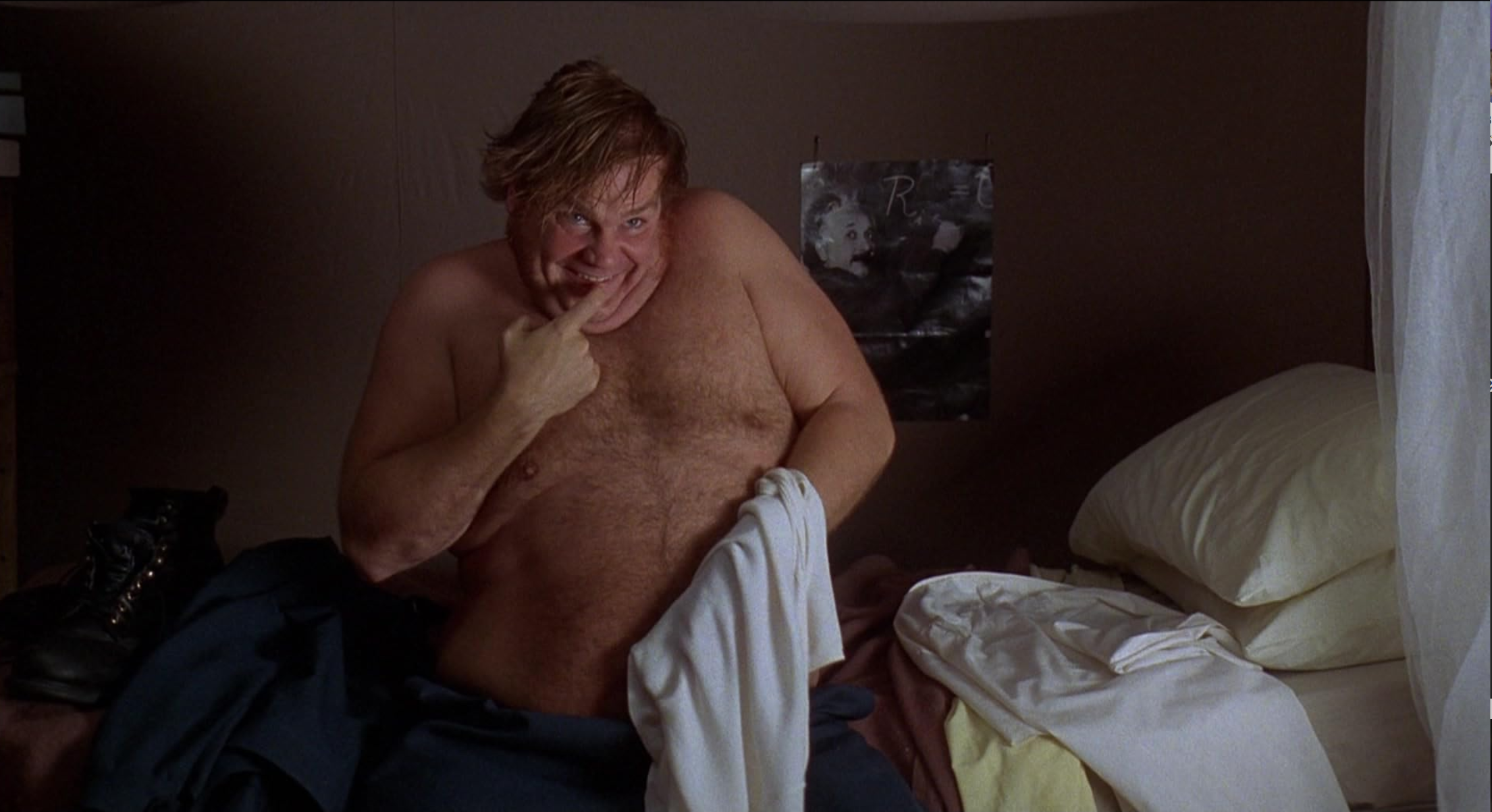
And if that day never comes... well, at least we'll always have a topless Chris Farley and his timeless, unbridled eroticism.